

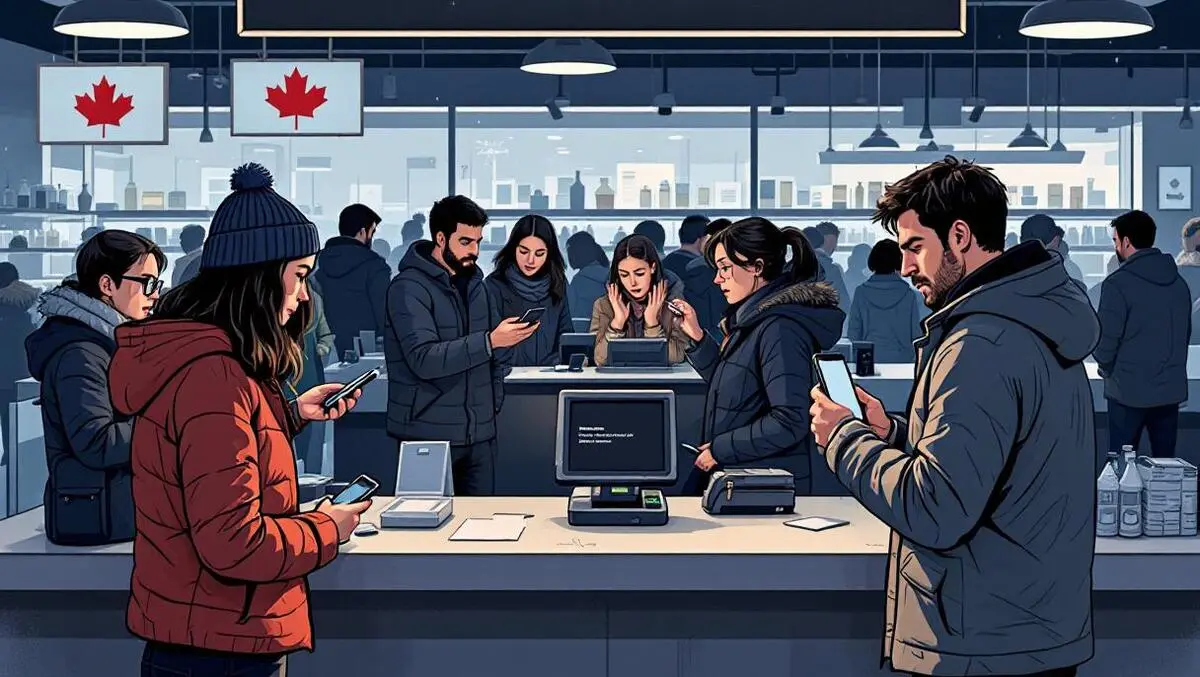
Payment outages put Canadian retailers’ sales at risk
Thu, 12th Mar 2026.webp)
Payment system failures are putting Canadian retail and hospitality sales at risk. Outages are linked to an estimated USD $7.6 billion in annual exposure and are raising concerns about customer trust.
New research from FreedomPay, Dynatrace and Retail Economics found Canadian businesses experience more payment outages than peers in several other major markets. Respondents reported an average of 6.8 outages a year in Canada, compared with 5.7 in the US, 5.1 in the UK, 5.0 in France and 4.0 in Germany.
The findings focus on disruption at the point of transaction, where delays can quickly translate into lost sales. Canadian consumers will wait less than six minutes during a service outage before abandoning a purchase, yet the average outage lasts 67 minutes-leaving a wide gap between customer patience and typical recovery time.
Outage pressure
The report drew on two nationally representative surveys of 2,000 Canadian consumers and 200 retail and hospitality managers. It examined the frequency, duration and commercial impact of payment disruptions.
Larger operators reported higher disruption levels. Businesses with more than $700 million in annual turnover said they face more frequent payment outages than smaller organisations. That increases exposure because large chains process high transaction volumes and often run complex in-store and digital operations.
FreedomPay President and Chief Technology Officer Christopher Kronenthal described outages as a compounding problem for both merchants and customers.
"Payment disruption is a direct hit to the consumer and to businesses, and the longer it lasts, the more impact snowballs with missed sales and compounding recovery costs," said Christopher Kronenthal, President at FreedomPay. "Canadian businesses must adopt strategies to avoid and withstand disruption, including layered backup solutions and holistic payment ecosystems."
Beyond immediate sales losses, the research pointed to longer-term reputational damage. It identified consumer segments that change behaviour after a single incident. Almost two-thirds (63%) of "High-Risk Critics"-described as affluent, frequent shoppers-said one payment failure reduces their trust in a business. It also found 38% of "Silent Walkouts," defined as people who abandon without complaint, said a single failure reduces trust.
Social media can amplify the impact of a failed checkout. Some 60% of Gen Z respondents said they would likely share a negative experience online after a payment disruption.
Recovery window
The study highlighted the importance of rapid restoration. Recovery within the first five minutes can prevent more than 90% of potential losses-just under the six-minute consumer patience window identified in the research.
Dynatrace framed the issue as a need for resilience planning across the payment chain and positioned outage readiness as an investment priority for merchants that want to protect transaction flow and customer perception.
"When payments fail, customers don't just lose time, they lose confidence. A truly integrated payment resilience strategy, capable of anticipating, absorbing and recovering from outages, is no longer an option. It's the critical investment businesses need to make now to protect their transactions and reputation," said David Jones, VP of NORAM Solution Engineering at Dynatrace.
Readiness gaps
The research suggests many businesses still lack basic contingency arrangements. It found 32% of retail and hospitality firms in Canada operate without any secure digital payment backup.
Among those that have taken some measures, safeguards tend to be partial rather than consistent. The report found 44% use secondary internet connections, 40% offer offline card processing and 29% provide mobile payment alternatives.
Retail Economics Chief Executive Richard Lim said merchants need a broader view of resilience that includes connectivity, processing methods and in-store operations.
"To effectively combat these vulnerabilities, businesses need to adopt solutions such as secondary internet for network resilience, offline card processing, and mobile payment alternatives. An integrated approach including robust POS reliability and guaranteed power continuity will enable businesses to secure financial stability and customer trust," said Richard Lim, CEO at Retail Economics.
The findings come as retailers and hospitality operators balance customer experience expectations with tighter operational constraints and growing dependence on always-on digital services. The Canada-specific results highlight outage frequency and recovery speed as key factors in protecting revenue at the till and maintaining consumer confidence over repeat visits.
FreedomPay and Dynatrace said Canadian merchants have a narrower margin for error at checkout, with minutes separating a recoverable incident from customer abandonment.