

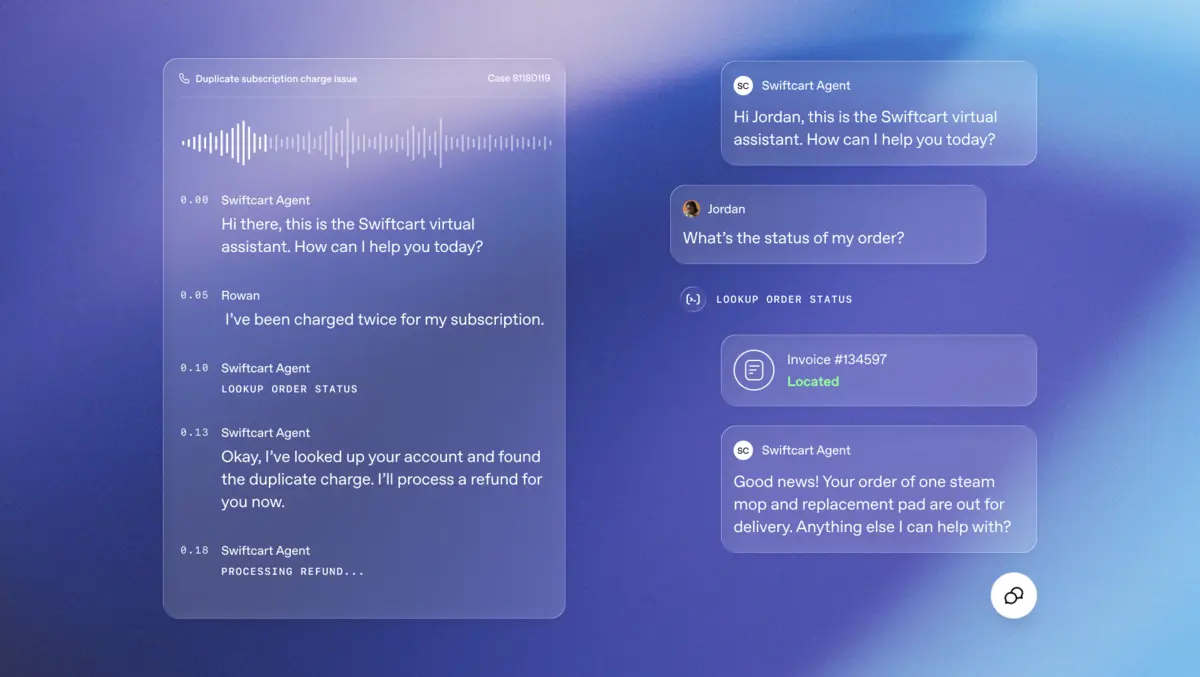

OpenAI has launched OpenAI Presence for enterprise customers, designed for AI agents used in voice and chat workflows.
Presence targets companies that want to deploy AI agents in customer service and internal operations with tighter control over what those agents can access and do. Each deployment starts with a specific job, such as handling billing issues, insurance claims or employee IT service requests, and the agent is given only the information and system access needed for that task.
The product combines model reasoning with policies, guardrails and escalation rules. Companies set the boundaries for approved actions, define when an agent needs approval and decide when a case should be handed to a person.
The system was developed through years of work with large organisations. It is being offered to eligible enterprise customers through a limited general availability programme and is deployed with support from OpenAI Forward Deployed Engineers and selected global systems integrators, rather than as a self-serve tool.
How it works
Presence supports real-time voice and chat interactions. Businesses can use the same framework across different channels while keeping policies, evaluations and escalation rules consistent across deployments.
Its components include standard operating procedures, approved actions, simulation tools, evaluation systems and a Codex-based improvement process. These are intended to help teams connect company systems, monitor performance, enforce policy and adjust the agent after launch.
Before a deployment reaches users, teams can test it against routine requests, edge cases and higher-risk scenarios. Simulations and grading tools check whether the agent reached the correct outcome, followed policy, used tools correctly and escalated when required.
After launch, production sessions and escalations can show where an agent is performing well and where it needs changes as products, policies and customer behaviour shift. Codex can then suggest updates for teams to test against the version in production before approving a controlled rollout.
Early users
OpenAI said Presence now runs its English-language phone support line, handling open-ended requests, verifying callers, using account context and taking approved actions. It says the system now resolves 75% of inbound issues without human assistance.
OpenAI also said the product's improvement loop reduced human handoffs by 15 percentage points in 10 days on that support channel. The figures offer one of the clearest indicators yet of how OpenAI is trying to move from model supply to more managed business software for operational use.
Several companies are already working with the product in specific markets and use cases. BBVA is exploring AI voice support for everyday banking services in Mexico, while SoftBank is testing Japanese-language customer conversations.
In Australia, insurer IAG plans to use the system for customer support in high-pressure situations, including severe weather events and natural disasters. It is assessing customer agents that could help people through the claims process during periods of heavy demand.
Enterprise push
The launch reflects a broader shift in the AI sector as vendors try to solve a problem many large businesses say remains unresolved: moving generative AI from trial projects into tightly managed production roles. In that setting, the central question is less whether an agent can generate useful responses and more whether it can operate reliably inside company systems while staying within policy.
OpenAI is positioning Presence around that need for operational control. It says agents can answer questions, resolve issues, use company systems, take approved actions and escalate to people when needed, while customers retain control over permissions and rules.
OpenAI also said the product was developed in close collaboration with its research team, with lessons from deployments feeding back into ongoing product development. That suggests the company sees enterprise rollouts not only as a source of revenue but also as a way to refine how agents behave in production environments.
For now, access remains restricted. Presence is available only to eligible enterprise customers and is not yet offered as a self-serve product, underlining the level of technical and operational support still required for many agent deployments.
"At BBVA, we are working closely with OpenAI to explore how trusted customer agents can help shape the future of financial services. As a design partner for Presence, we are working with OpenAI to help shape and refine voice experiences for financial customer service, as part of our focus on delivering a faster, more seamless and more personalised experience across every interaction," said Daniel Ordaz, Head of AI Transformation, BBVA Mexico.